
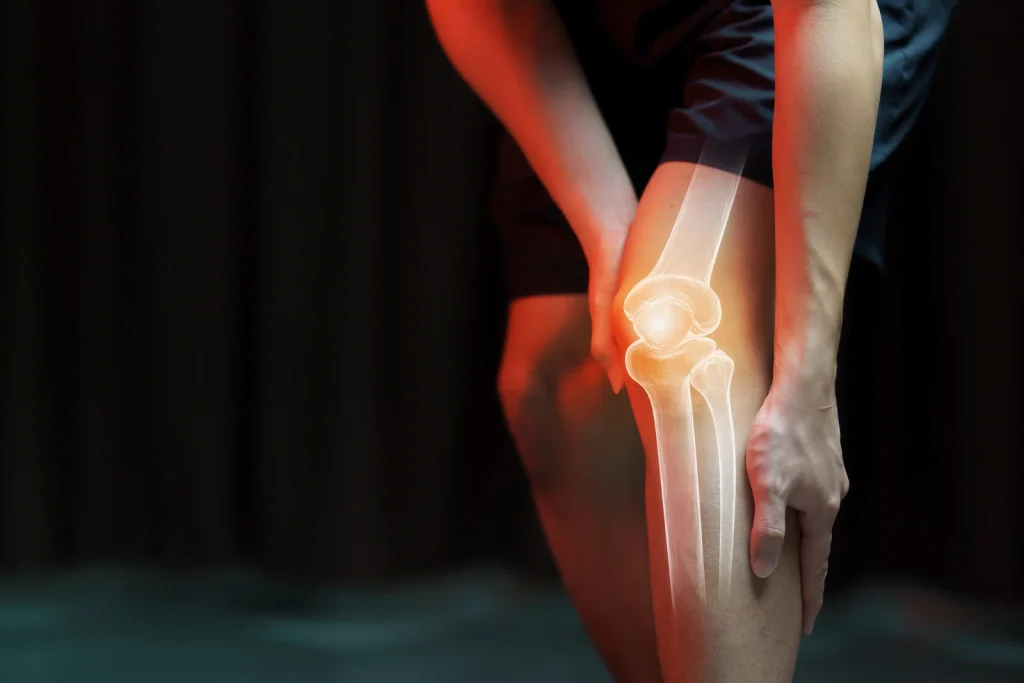
Knee pain can stop a runner in their tracks faster than almost any other injury.
Many runners immediately assume they have runner’s knee when discomfort starts around the front of the knee. The term is widely used in running communities, but the truth is that not every running related knee issue is actually runner’s knee. In fact, many runners treat the wrong problem for weeks or months before discovering the real cause.
Physical therapy helps identify the true source of knee pain so runners can recover properly and return to training safely. Many runners throughout Hamilton County begin their recovery process at our Noblesville Location.
>>>If knee pain is interfering with your training, you can request an appointment to begin a personalized recovery plan designed for runners.
What Runner’s Knee Actually Is
Runner’s knee is commonly used to describe pain around the front of the knee, particularly near or behind the kneecap. The medical term often associated with this condition is patellofemoral pain syndrome.
This condition occurs when the kneecap does not move smoothly within the groove of the thigh bone during movement. Instead of gliding efficiently, the kneecap may shift slightly, increasing pressure and irritation in the joint.
Runners often notice symptoms during activities that increase stress on the kneecap joint. This may include running downhill, climbing stairs, squatting, or sitting with bent knees for extended periods.
Runner’s knee can develop gradually as training volume increases or when biomechanical issues place additional stress on the knee joint.
The Problem With Self Diagnosing Knee Pain
One of the biggest mistakes runners make is assuming that every type of knee pain is runner’s knee.
Several different conditions can create similar symptoms. Without a proper movement evaluation, runners may follow generic advice that does not address the actual problem.
Some of the most common issues mistaken for runner’s knee include:
- Iliotibial band irritation along the outside of the knee
- Tendon irritation below the kneecap
- Hip weakness causing poor knee alignment
- Limited ankle mobility affecting running mechanics
- Muscle imbalances that change how the knee absorbs force
Each of these problems requires a different treatment approach. Treating the wrong condition can delay recovery and sometimes worsen symptoms.
A proper assessment helps determine where the dysfunction actually begins.
The Knee Is Often Not the Real Problem
In many cases, the knee is simply the area where symptoms appear, not the place where the problem begins.
Running requires coordinated movement between the hips, knees, ankles, and core. When one part of that system is not functioning efficiently, the knee often absorbs additional stress.
Weak hip stabilizers are a common contributor to knee pain in runners. When these muscles do not control the position of the thigh during movement, the knee may collapse inward slightly with each stride. Over thousands of steps during a run, this movement pattern can irritate the structures around the kneecap.
Limited ankle mobility can also contribute to knee strain. If the ankle cannot move properly during foot strike, the knee may compensate by absorbing more force.
Physical therapy evaluates these movement patterns to determine why the knee is being overloaded.
How Physical Therapy Helps Runners Recover
Treating knee pain effectively requires more than just resting from running.
Physical therapy focuses on improving mobility, strengthening key muscles, and correcting movement patterns that contribute to the problem.
Hands-on treatment techniques are often used to improve tissue mobility and reduce tension in the surrounding muscles. For many runners dealing with stiffness or restricted joint movement, Manual Therapy can help restore proper mechanics.
Muscle trigger points in the quadriceps, hips, or surrounding tissues may contribute to pain and poor muscle activation. In these situations, Dry Needling can help reduce muscular tension and improve how those muscles function during running.
Strengthening is also essential for long term recovery. When runners need to build strength without placing excessive stress on irritated tissues, Blood Flow Restriction allows strengthening exercises to occur with lighter loads while still promoting meaningful muscle adaptation.
These treatments are combined with corrective exercises designed to improve running mechanics and reduce stress on the knee.
Common Training Mistakes That Lead to Knee Pain
Training errors are one of the most common reasons runners develop knee pain.
The body adapts well to gradual increases in training load, but sudden changes can overwhelm the tissues that support the knee.
Several training habits frequently contribute to knee discomfort:
- Increasing mileage too quickly
- Running primarily on downhill terrain
- Skipping strength training for the hips and core
- Wearing worn out running shoes
- Ignoring early warning signs of discomfort
Small adjustments to training routines can make a significant difference in long term joint health.
Physical therapy helps runners understand how their body responds to training so they can progress safely.
Building a Stronger Running Foundation
Recovering from knee pain is not only about eliminating symptoms. It is also about improving how the body handles the demands of running.
When mobility, strength, and movement mechanics improve, the knee becomes much more resilient to repetitive stress. Runners often find that they return to training with better efficiency and fewer recurring issues.
Patients also gain valuable knowledge about how to maintain their body between training sessions. Mobility work, strength training, and smart progression of mileage all play an important role in keeping runners healthy.
This long term approach to care reflects the philosophy behind the clinic’s treatment model.
Built To Last.
Take the First Step Toward Running Pain Free
Knee pain should not force you to give up the activity you enjoy.
If discomfort is interfering with your runs, a movement assessment can identify the real cause and create a plan to restore healthy mechanics.
Many runners throughout Noblesville and Hamilton County begin their recovery journey at our Noblesville Location, where treatment plans are designed for active individuals who want to stay moving.
Call (317) 764-2884 to speak with the clinic team or request an appointment and get back to running with confidence.