
Muscle tightness can turn a strong workout, competitive season, or active weekend into days of limited movement and frustration.
For athletes and active adults in Noblesville, recovery is not simply about resting until discomfort disappears. It is about understanding why the body feels restricted and choosing treatments that support better movement. We use Cupping Therapy as one possible part of a personalized physical therapy plan for people who want to stay active, train consistently, and avoid recurring setbacks.
>>>Begin working toward more comfortable movement. Book an appointment online.
What Is Cupping Therapy?
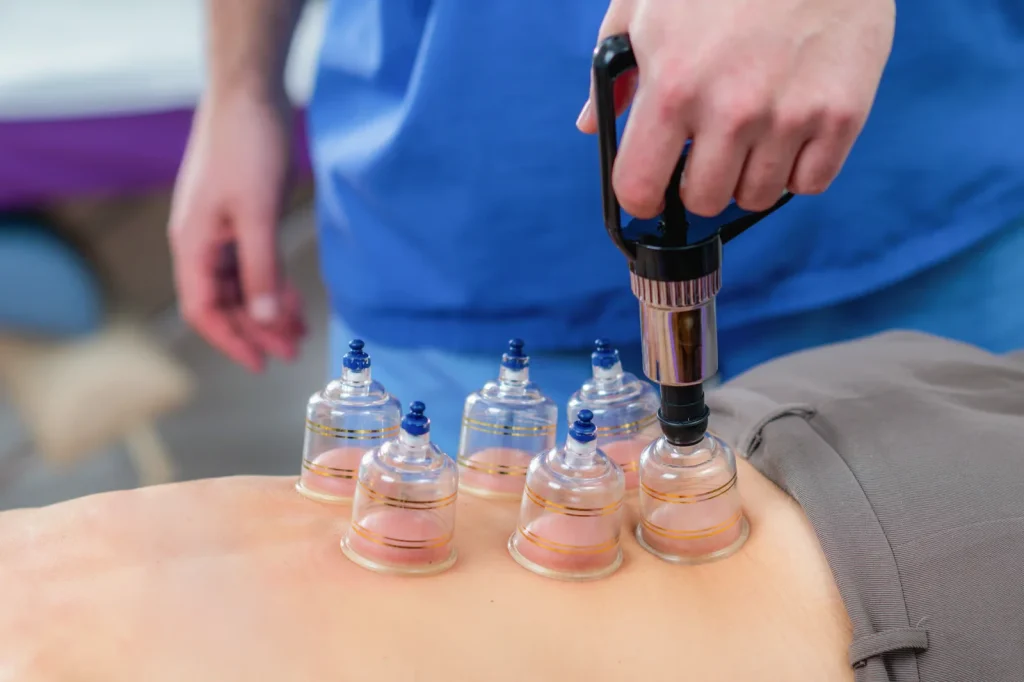
Cupping Therapy is a treatment technique that uses specialized cups to create controlled suction against the skin. Instead of pressing down on muscles and connective tissue, the cups gently lift the tissue.
Physical therapists may use stationary cups in a specific area or move the cups across the skin. The technique selected depends on the person’s symptoms, activity level, mobility, and overall treatment goals.
The suction often creates temporary circular marks. These marks are caused by changes in the small blood vessels beneath the skin and are not an indication that toxins have been removed from the body. The National Center for Complementary and Integrative Health notes that cupping can leave temporary skin discoloration and may also cause side effects such as burns or infections when it is not performed appropriately.
Our goal is to use the technique thoughtfully, not simply apply cups because an area feels sore.
Signs Cupping Therapy May Fit Your Recovery Plan
Active adults often consider Cupping Therapy when muscle tightness or discomfort begins affecting training, work, or everyday movement. It may be considered for people experiencing:
- Tight shoulders or upper-back muscles after lifting
- Leg soreness following running, cycling, or field sports
- Restricted movement that affects exercise technique
- Persistent muscle tension between practices or competitions
- Discomfort that returns after activity
These concerns do not automatically mean cupping is the correct treatment. A physical therapy evaluation helps us determine whether the restriction is related to muscle sensitivity, joint mobility, strength, training volume, or movement mechanics.
How Cupping Therapy Supports a Larger Treatment Strategy
Research suggests that cupping may provide short-term relief for some types of musculoskeletal pain, but the quality of evidence varies. A 2023 review described the evidence supporting cupping in musculoskeletal and sports rehabilitation as low to moderate.
A review involving amateur and professional athletes also reported possible improvements in perceived pain, range of motion, and disability. However, most of the included studies had an unclear or high risk of bias.
This is why we do not treat Cupping Therapy as a complete solution. Temporary relief can be valuable, especially when it allows someone to move more comfortably, but long-term progress usually requires active rehabilitation.
We may combine cupping with mobility exercises, progressive strengthening, movement retraining, or Manual Therapy. The combination is selected according to the individual, not a standard protocol used for every athlete.
When Cupping Therapy May Not Be Appropriate
Before using Cupping Therapy, we consider medical history, skin health, medications, and the condition of the treatment area. Cupping may need to be avoided or modified when someone has:
- Open wounds, active skin infections, or significant irritation
- A condition that affects normal blood clotting
- Medication that increases bruising or bleeding risk
- Reduced sensation in the treatment area
- Skin conditions that may worsen with suction
Patients should tell their physical therapist about recent injuries, health changes, medications, and previous reactions to cupping. Clear communication helps us select an appropriate and safe treatment approach.
Why Personalized Physical Therapy Matters
Two athletes can report tight hamstrings and still need completely different plans. One person may have increased training volume too quickly. Another may lack hip strength or control. A third may be compensating for limited ankle mobility.
We look beyond the location of discomfort to identify the factors influencing movement. That may include reviewing exercise technique, training habits, recovery routines, strength, flexibility, and sport-specific demands.
This personalized approach helps us determine when Cupping Therapy is useful and when another intervention deserves greater attention. It also helps active adults make progress without becoming dependent on passive treatments.
Keep Moving With Confidence
Recovery should help you return to the activities that matter, whether that means competing, lifting, running, gardening, or keeping up with your family.
We provide individualized physical therapy for motivated adults and athletes throughout Noblesville and Hamilton County. Our Noblesville Location offers personalized care designed around your goals, your activities, and your long-term health.
Call (317) 548-1643 or book an appointment online to schedule your evaluation.