

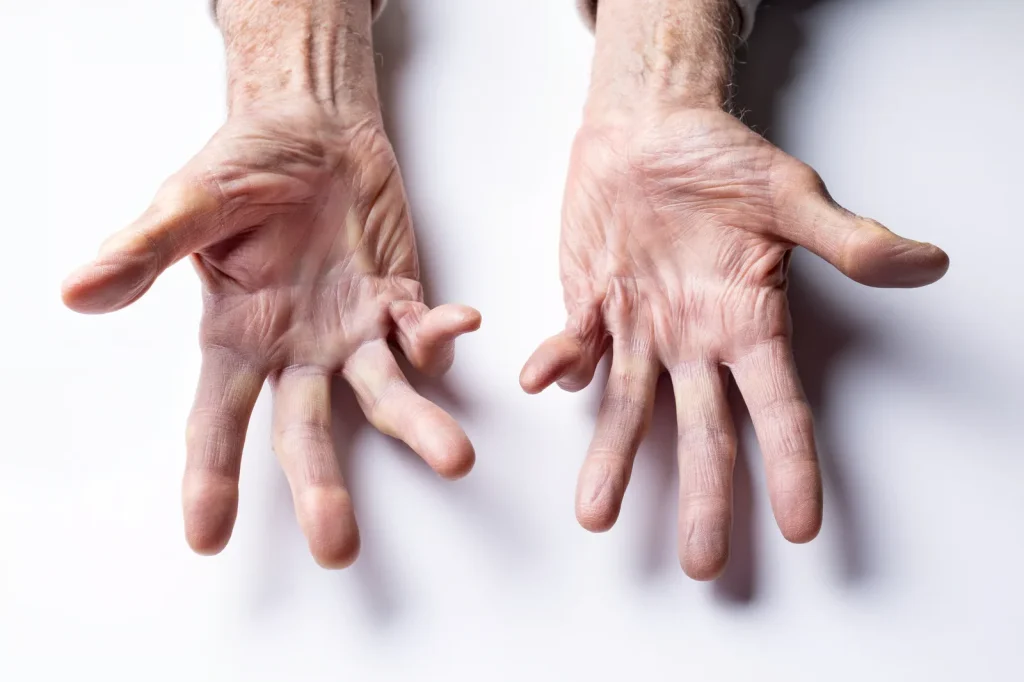
Staying active with Ehlers-Danlos syndrome can feel like a constant balancing act between doing enough to build strength and avoiding too much stress on sensitive joints.
Pain, fatigue, instability, and unpredictable symptom changes can make it difficult to know which activities are helpful. We help people develop personalized movement strategies that reflect their diagnosis, current abilities, and meaningful goals.
>>>Start building a more sustainable approach to activity! Book an appointment online.
Why Movement Can Feel Complicated
Ehlers-Danlos syndromes are a group of inherited connective tissue disorders. Symptoms and medical considerations vary among the different types, so exercise recommendations should never be treated as universal.
People with hypermobile Ehlers-Danlos syndrome, commonly called hEDS, may experience joint hypermobility, instability, pain, soft-tissue injuries, and fatigue. A joint that moves through a large range does not necessarily have the strength or control needed to manage that range comfortably.
This can create a frustrating situation. Movement may be important for maintaining function, but certain activities can also aggravate symptoms when the intensity, volume, or technique is not appropriate.
Priorities for More Sustainable Exercise
The goal is not to avoid movement. It is to select and progress movement carefully. Helpful priorities may include:
- Building strength around vulnerable joints
- Improving balance and awareness of joint position
- Practicing controlled movement before adding speed or resistance
- Increasing activity in small, manageable stages
- Allowing appropriate recovery between demanding sessions
The Ehlers-Danlos Society explains that strengthening can help stabilize hypermobile joints and recommends exercises focused on movement control. GeneReviews also identifies tailored strength, proprioception, and joint-stability training as important parts of hEDS management.
The correct starting point will be different for each person. Someone who is currently experiencing frequent flare-ups may need a slower progression than an athlete who has already developed a reliable strength base.
More Flexibility Is Not Always Better
Stretching may feel natural when muscles are tight, but pursuing a larger range of motion can create additional instability in an already hypermobile joint. The sensation of tightness does not always mean the muscle needs a deeper stretch. It may be working harder to protect or stabilize the area.
We often focus on helping patients recognize the difference between useful mobility and uncontrolled movement. Gentle stretching may be appropriate for specific tissues, but it should stay within a safe range and avoid placing unnecessary pressure on unstable joints.
The Ehlers-Danlos Society warns that stretching beyond a normal range can be harmful and may increase instability when surrounding muscles cannot adequately control the joint.
Signs Your Activity Plan May Need Adjusting
An exercise program should challenge the body without repeatedly creating preventable setbacks. It may be time to modify your routine when you notice:
- Repeated joint slipping, giving way, or subluxation
- Pain that steadily increases as training continues
- Symptoms that remain elevated well beyond the activity
- Significant fatigue after relatively small increases in exercise
- Dizziness, a racing heart, or difficulty tolerating upright activity
New or concerning symptoms should be discussed with the appropriate medical provider. People with vascular Ehlers-Danlos syndrome require particularly careful medical guidance because activities that sharply increase blood pressure or involve heavy straining may be unsafe.
Exercise modifications should also consider associated conditions. For example, someone with dysautonomia may initially tolerate seated or lying exercises better than prolonged upright activity.
How Physical Therapy Can Support Active Goals
Physical therapy can help turn general advice such as “strengthen your joints” into a specific and manageable plan. We assess movement control, strength, balance, activity tolerance, and the demands of the activities a patient wants to perform.
A 2024 systematic review found support for therapeutic exercise and motor-function training to improve function, well-being, and quality of life in people with hEDS and generalized hypermobility spectrum disorder. The same review noted that evidence for other interventions remains limited, reinforcing the importance of an active, exercise-centered plan.
When appropriate, gentle Manual Therapy may be used to address discomfort or selected soft-tissue restrictions. It should complement strength and movement training rather than replace them, and techniques must account for tissue sensitivity and joint instability.
Build an Active Life Around Your Needs
Staying active with Ehlers-Danlos syndrome does not require forcing your body into a standard fitness plan. Progress may mean improving joint control, walking farther without a flare-up, returning to modified strength training, or participating more comfortably in daily life.
We provide individualized care for active people throughout Noblesville and Hamilton County. Treatment at our Noblesville Location is shaped around your symptoms, medical needs, and personal definition of an active life.
Call (317) 548-1643 or book an appointment online to schedule an evaluation.